
Thank You, Cancer: A Story of Breaking Down and Breaking Through
This blog is part of our Power of Healing series, which explores powerful journeys of healing and recovery and the resilience that fuels them.

In our final installment of our Power of Healing series, we explore an extraordinary journey of survival, self-discovery, and resilience. At just 26, this month's author received a rare cancer diagnosis under traumatic circumstances, leading her to confront not only a life-threatening illness but also the impact of past trauma, body image, and identity. Through her honest reflection, she shares how facing mortality reshaped her understanding of resilience, deepened her gratitude for her body, and empowered her to advocate for herself in a complex healthcare system.
Disclaimer: Mentions of childhood abuse, self-harm, disordered eating, and medical trauma. If you or someone you know is struggling, help is available. In the US, the number 988 is the National Suicide and Crisis Lifeline, available by phone or text 24/7 in English and Spanish.
Thank You, Cancer: A Story of Breaking Down and Breaking Through
Cancer is a relatively common disease in today’s world. According to the World Health Organization, one in five individuals will develop cancer during their lifetime. Most of these individuals discover they have cancer via a scan or bloodwork, but at the age of 26, I learned of another way that cancer can be diagnosed, especially if it’s growing in your uterus – your body can simply give birth to it.
Throughout my cancer journey, there have been countless moments of suffering. It was terrifying to be in labor with a mass for five days. It was tortuous – and humiliating – to give birth to a tumor in front of an audience of medical personnel. It was devastating to be diagnosed with a rare, aggressive cancer in my mid-twenties. It was heartbreaking to learn the only way to avoid death was to have a hysterectomy before I ever had children. The relentless physical pain I live with daily can be excruciating, and the uncertainty of the future is often petrifying. Being diagnosed with cancer is like being swallowed by darkness, but it’s often in the deepest shadows that we discover our inner flame of resilience.
At the beginning of my cancer journey, I would have never imagined being thankful for the malignant cells that turned my life upside down, but months post-diagnosis, I can say that cancer is one of the best things to have ever happened to me. Only through a brush with your own mortality can some lessons be learned, but by sharing the insights I have gained, I hope that others can find the same peace that I fought like hell to earn.
Survival vs. Resiliency
When you’re first diagnosed with cancer, you may or may not know if you’re terminal. For the first three weeks after my diagnosis, my prognosis was unclear, and it was in this liminal space that I learned the difference between resiliency and survival. By overcoming the abuse, insecurity, and instability of my childhood, I thought I was the posterchild of resiliency. My ACEs score was sky-high, yet I held two college degrees and a full-time job, but as I sat with the thought of death, a young death, it dawned on me that my achievements were not products of my resiliency but rather efforts to continually outrun my past. I wasn’t earning degrees and doing well in life because I was a resilient person – I was doing it out of fear, the fear that if I didn’t succeed enough then my life would revert to the scarcity and instability I had known in childhood. Letting fear fuel my life meant my existence was built on a shaky, insecure foundation, but cancer demolished that rickety structure, giving me the opportunity to rebuild my life upon a sturdy foundation made of authenticity, gratitude, and the joy of being alive.
Loathing vs. Loving
I had always hated my body. I despised every ounce of fat, each pimple, and all the flaws that shined like neon lights when I looked into a mirror. Childhood abuse teaches you that your body is disgusting, and society will happily second that notion, encouraging you to engage in eating disorders and negative self-talk. My decade-old diary is filled with pages of self-flagellation, convinced that my body was baggage that made me unlovable. Since cancer, however, it nauseates me to even attempt to think of myself in that light. I had cancer symptoms for over a decade – symptoms that countless doctors dismissed – but those symptoms vanished within days after birth as if my body had decided to treat the cancer itself. And when the top cancer hospital in the nation couldn’t explain how my uterus had trapped an aggressive cancer, resulting in a stage 1 diagnosis after a decade of malignancy, it became impossible for me to hate my body ever again because it did the impossible to keep me alive. While I engaged in disordered eating and lambasted myself with endless criticisms, my body still battled cancer silently on my behalf for over 3,000 days. Cancer has taught me that even when I didn’t love my body, it still loved me.
Difficulty vs. Advocacy
As a woman, it can be difficult to advocate for yourself. It is far too easy to be seen as “difficult”, “hysterical”, or “attention-seeking”, especially by medical professionals. Even worse, our physical pain is often dismissed as theatrics, leaving us to endure things we shouldn’t, such as being in labor with a sarcoma for five days. When I first sought medical attention, it was clear that something was wrong. A pelvic exam revealed a severely traumatized and damaged cervix, and an ultrasound showed that in my attempts to avoid a hemorrhage from birthing whatever this thing was, I had actually been pushing the mass through my cervix and back into my uterus each time it tried to fall out. Even then, the doctor told me to “keep pushing it back up” until I could see a specialist, leaving me in agony for an additional four days until an emergency surgery was required because the mass had begun to die inside of me, rotting me from the inside out. It was after this experience, an experience that could have killed me, that I shed my identity as a passive, acquiescent patient. If I couldn’t trust the medical community to keep me safe, then I had no choice but to become my own advocate. Once I received my diagnosis, I read every academic article available on my cancer type so I could participate in conversations with my oncologists, working together to come up with an evidence-based treatment plan. I keep my care team on their toes, contacting them when I’m overdue for my next round of quarterly tests. To become your own advocate does not mean you’re a difficult patient. It means you rise to the challenge of navigating a difficult healthcare system.
Resource for Turning Survival into Resiliency
Creating Safety After Chaos: How to Build an Emotionally Regulated Life Post-Trauma – A clinical psychologist’s guidance on rebuilding your life after experiencing long-term trauma.
Resource for Self-Love
15-Minute Meditation for Self-Love – A quick video to ground yourself in self-appreciation and recognition for the goodness that lives within you.
Resource for Becoming Your Own Healthcare Advocate
A Doctor's Guide: How To Be A Patient Advocacy Rock Star (For You Or A Loved One) – A doctor’s advice on how to be heard by the medical community while navigating a health crisis.
Author Bio:

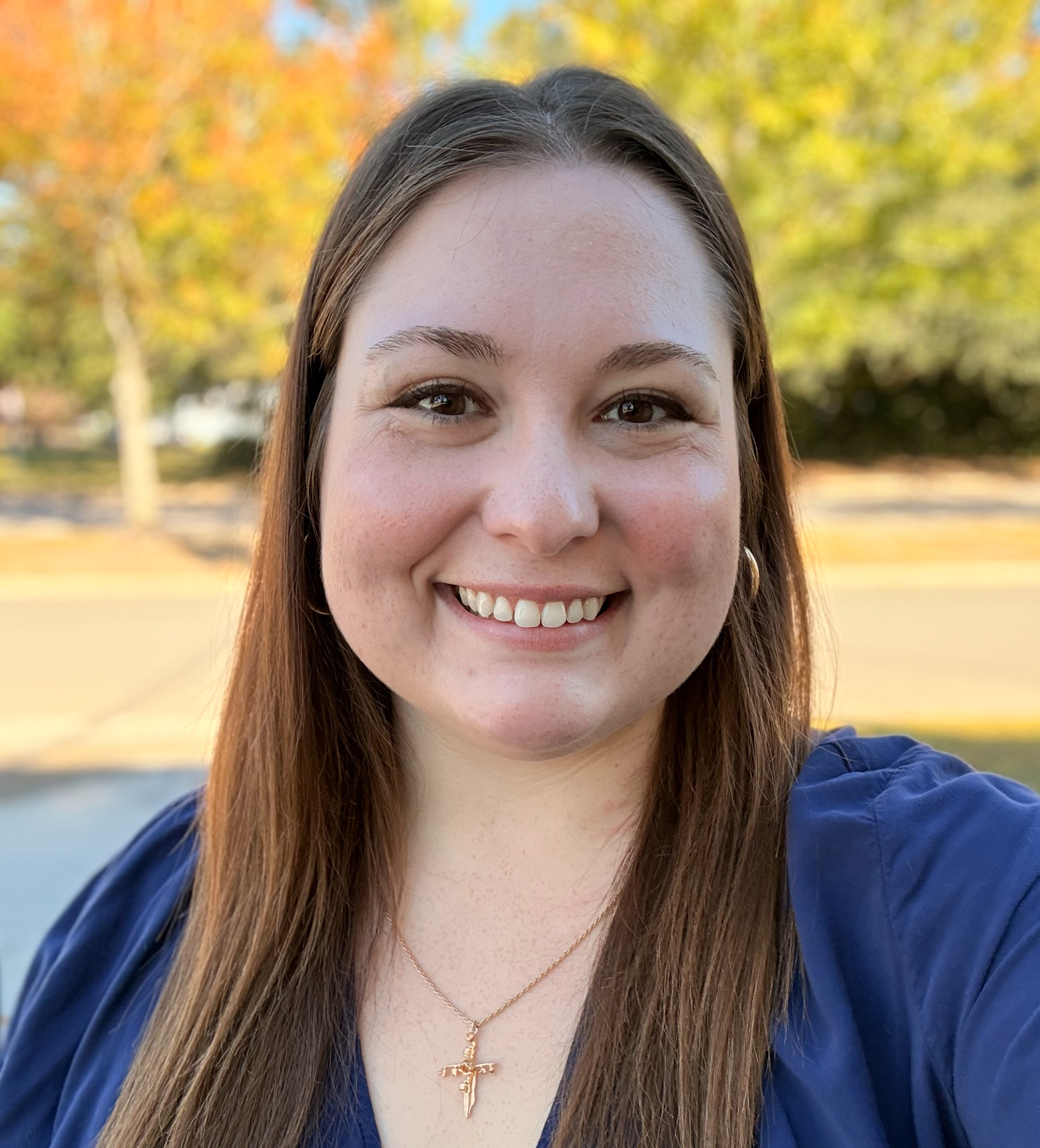
Kayleigh Heard is a criminologist and writer from South Georgia. Diagnosed with a rare cancer in her mid-twenties, she discovered that resilience isn’t about avoiding hardship but allowing it to transform you. Kayleigh is an advocate for women’s health and young adult cancer awareness, using her story to spotlight the systemic gaps in care and to encourage others to find strength in their own darkest moments. In her spare time, Kayleigh enjoys beating the odds and spending time with her family, friends, and loving pets.


It took me several attempts before I understood how important smooth acceleration is in eggy car. That made the progress feel rewarding
Wow, what a powerful story! It's amazing to see how people can find strength even in the toughest situations. This series is really inspiring. I've been having fun lately with say the word on beat game too – it's a good way to sharpen reflexes!